

For anyone who believes they're the first person to hurt this much
Blue Sisters | By Coco Mellors

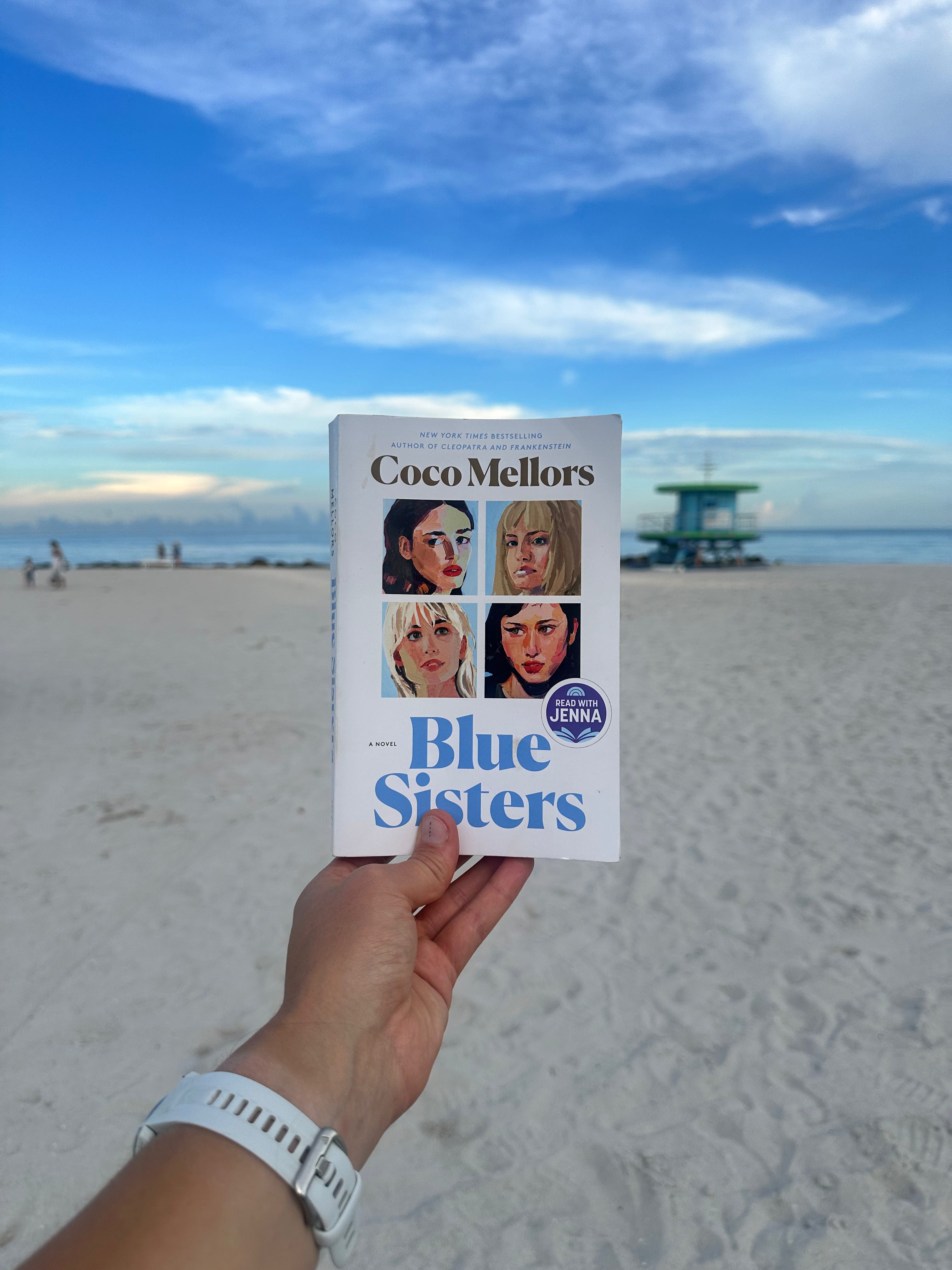
I was at a family wedding this weekend stuck in a conversation with a morose guest. You might know the type: always a victim of their circumstances. Life seems to go on only to inconvenience them.
I happened to know this particular person once had an avid reading habit, so I asked if they had read any good books this summer. A mistake.
“Ha!” They balked. Then added, in a tone that heavily implied how inconsiderate my question was, “I don't have time for that anymore.”
When did benign curiosity become insulting?
James Baldwin once said, “You think your pain and your heartbreak are unprecedented in the history of the world, but then you read.”
To those who like to compete in the pain Olympics, I highly recommend Coco Mellors’ novel Blue Sisters as an antidote.
Narrated by three of the four Blue sisters — Avery, Bonnie, and Lucky — the novel centers on the one-year anniversary of their fourth sister, Nicky’s, sudden death.
Some contemporary novels feel like you’re following protagonists for 300 pages without clear direction. The “more vibes than plot” style. (See my thoughts on Evenings and Weekends.)
Mellors’ writing is a cousin of this, but she creates complex characters that feel human. Each Blue sister possesses concrete flaws. They start the novel as victims of their own circumstances. They place blame. They self-sabotage. They avoid their real feelings. Somehow, you love them anyway.
Their personal failures become the plot beats, moving these women forward. You want to see them grow and succeed, as they grapple with what real grief and healing feel like.
Which brings me to Mellors' real gift, she can write a feeling better than most.
Take this passage about loneliness — that intractable distance you start to feel toward the end of a relationship: “She knew that part of her was still out there, standing along at the bottom of the garden huffing smoke into the night air, out of sight and out of reach.”
Or, the specter of chronic pain: “Language grasped at, but never caught, it. Each time Nicky tried to find the right words, it seemed to change shape… And when it was gone, she waited for it, like a volatile husband who has left in a rage but will inevitably return.”
She drags you into the breaking point of each sister and lets you see all the bruises.
You don't need to be grieving to find companionship in these pages. Blue Sisters is a novel that shows us that self-compassion can be an act of courage and no struggle is uniquely burdensome.
Final Thoughts: Ambitious without being punishing, beautiful without being precious.
Who should read Blue Sisters? Character-driven junkies. Readers ready to relish in the chaos of family. Therapists. Therapists-in-training. People unafraid to cry into their books. Morose wedding guests who need a bit of perspective.