

Some Feelings on Poetry
For National Poetry Month | "Poetry is the cilantro of reading and writing..."

This essay is part of my newsletter Filler Content. If you like it, toss a little love my way by clicking the heart at the bottom of this newsletter to help me share it with a wider audience. Feeling chatty? Write a comment. I’d love to hear from you!
A little known fact about me is that I am a published poet. The year was 2002. I was in the fourth grade, and Ms. Freitas was teaching us a unit on haikus.
One day in class, she gathered us around her computer (projectors only cast those flimsy clear worksheets back then), and she introduced us to a poetry challenge hosted by www.poetryzone.com. I love a competition. The prize could have been a year’s supply of broccoli, and I still would have wanted to win. Of course, it wasn’t. The prize was publication on www.poetryzone.com, which in my eyes was unfathomably glamorous. The Internet (still a proper noun then) was a place not many people frequented in those days, but I didn’t care. I craved the rush of seeing my writing selected by a stranger. Someone to say, these are worthy words.
Sadly, www.poetryzone.com no longer exists. Such is the peril of online publishing. But when I decided to write about poetry, I poked around the archives of the World Wide Web, and to my delight I found my poem.
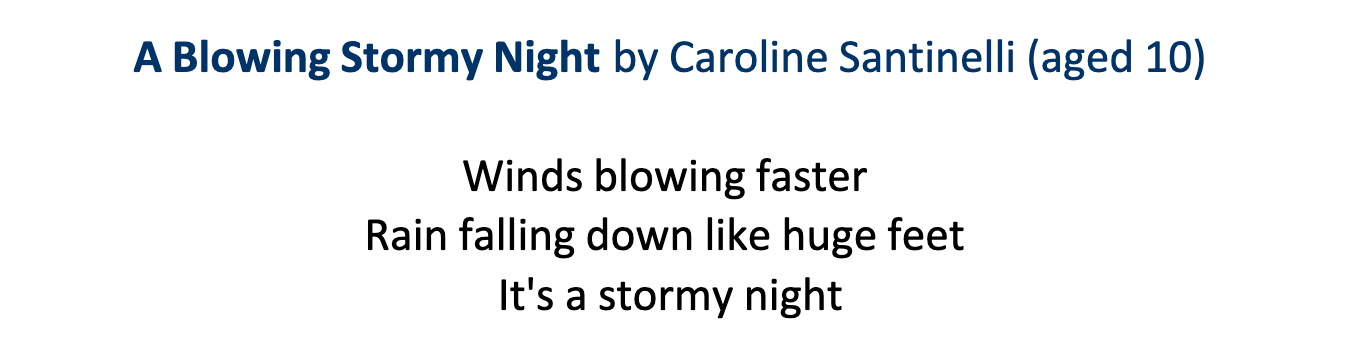
Maybe the Library of Congress isn’t knocking on my door to archive this baby, but “rain drops like huge feet” does make me laugh. Are they making the sound of huge feet? Are they the size of huge feet? Perhaps both?
I don’t write poetry these days for the same reason many people don’t write poetry: it’s a bit of mystery to me. Where do the line breaks go? Do I use punctuation? Why does this sound like I’m giving a vague and meandering sermon about gherkins? Are gherkins not a serious enough topic for a poem? Am I shallow?
Poetry is the cilantro of reading and writing: to some a delicate garnish with a pop of flavor, to others as sour and painful as stomaching dish soap. And I don’t think this is poetry’s fault. I blame us poetry lovers.
In grad school, my friend John coined the phrase, the pensive orgasm. The pensive orgasm is the performative “mmm” and nod by select audience members at the end of a poetry reading, signaling they are an insider. They get the poem. They taste the words; can’t you tell from their humming? The performance is insufferable.
Then there are the hobby poetry writers. These days when a friend tells me they are writing poetry, I often have two ungenerous thoughts:
One, is everything… okay?
Two, please don’t make me read it.
It’s an unfair reaction. There’s something earnest and vulnerable about admitting you are trying to tie down a feeling with words. To the recipient of this news, it’s a bit like being flashed. Someone’s unedited verbal nudity suddenly full frontal with no warning. My instinct is to look away.
The only thing worse than someone sending you their poetry is when they send you someone else’s. I find this behavior particularly offensive, because it’s never a dirty limerick or a lighthearted ode to a tomato or a toilet. Almost always it’s stanzas heavy with despair or speckled with melancholy; poetry is an excellent container for weighty feels. You’ll be enjoying a sunny walk through the park or calmly disassociating to an episode of The Traitors when WHAM! a text comes hurling into your afternoon with an excerpt from Ada Limón or Audre Lorde, and your mood is undone. Without consent, you’re forced to confront the feeling your friend is feeling, and now you’re feeling it too, which they think is magic, and you think: “I should go buy an ice cream sandwich.” Poetry costs calories.
***
I enjoy both cilantro and poetry when it is not being hurled at me like an emotional grenade with no warning, or hummed at.
Warning: poetry ahead.
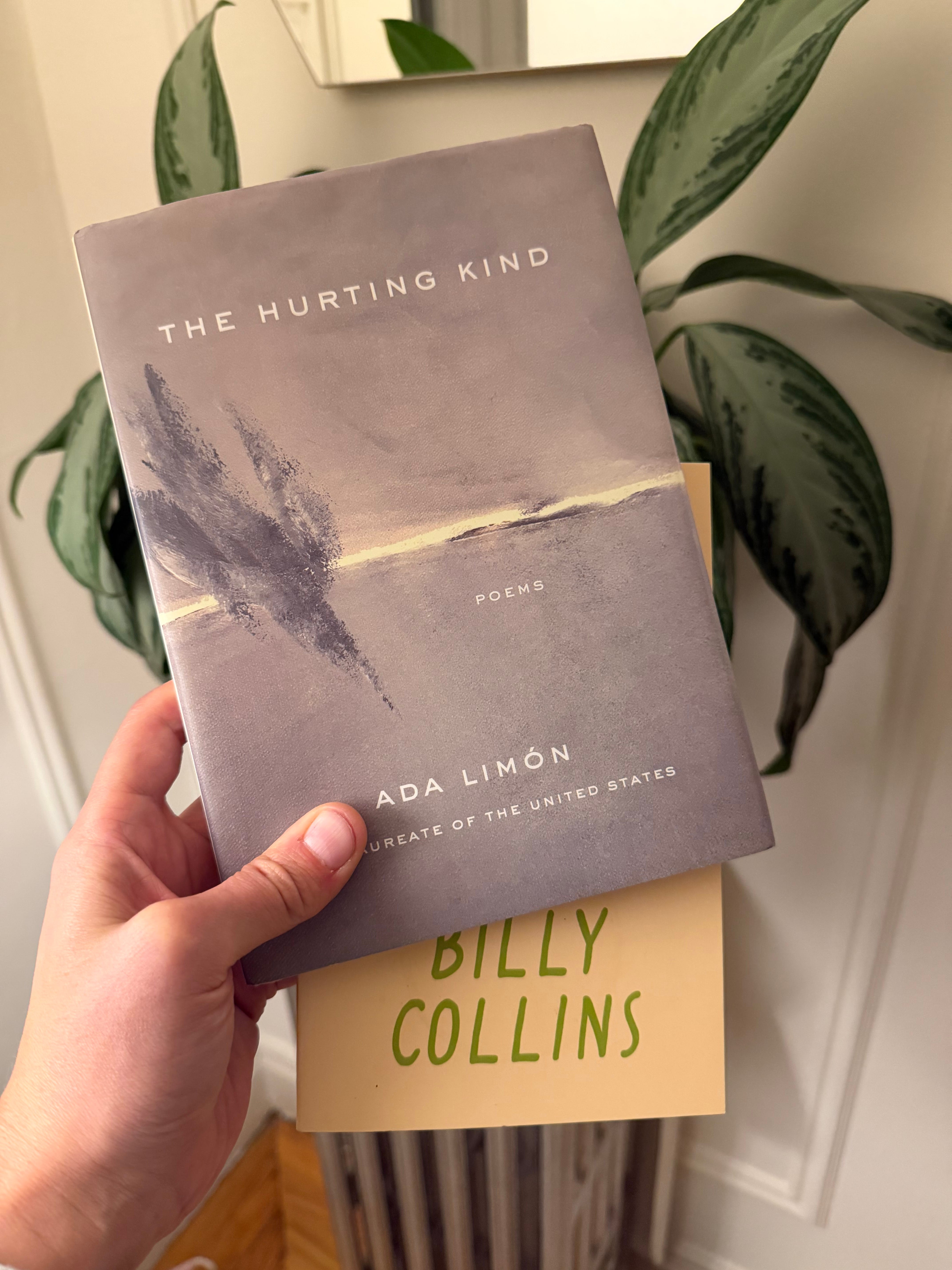
I appreciate those among us who can turn a word over and examine it from every angle. I like the poets who have a good ear. Those who can create rhythm with words I never would have thought to pair, words like ‘waddle-thieving.’ An excellent combination, no? I enjoy seeing language put into a completely new context. Ada Limón coins this particularly delightful phrase in her poem “Give Me This,” which opens her 2022 collection The Hurting Kind.
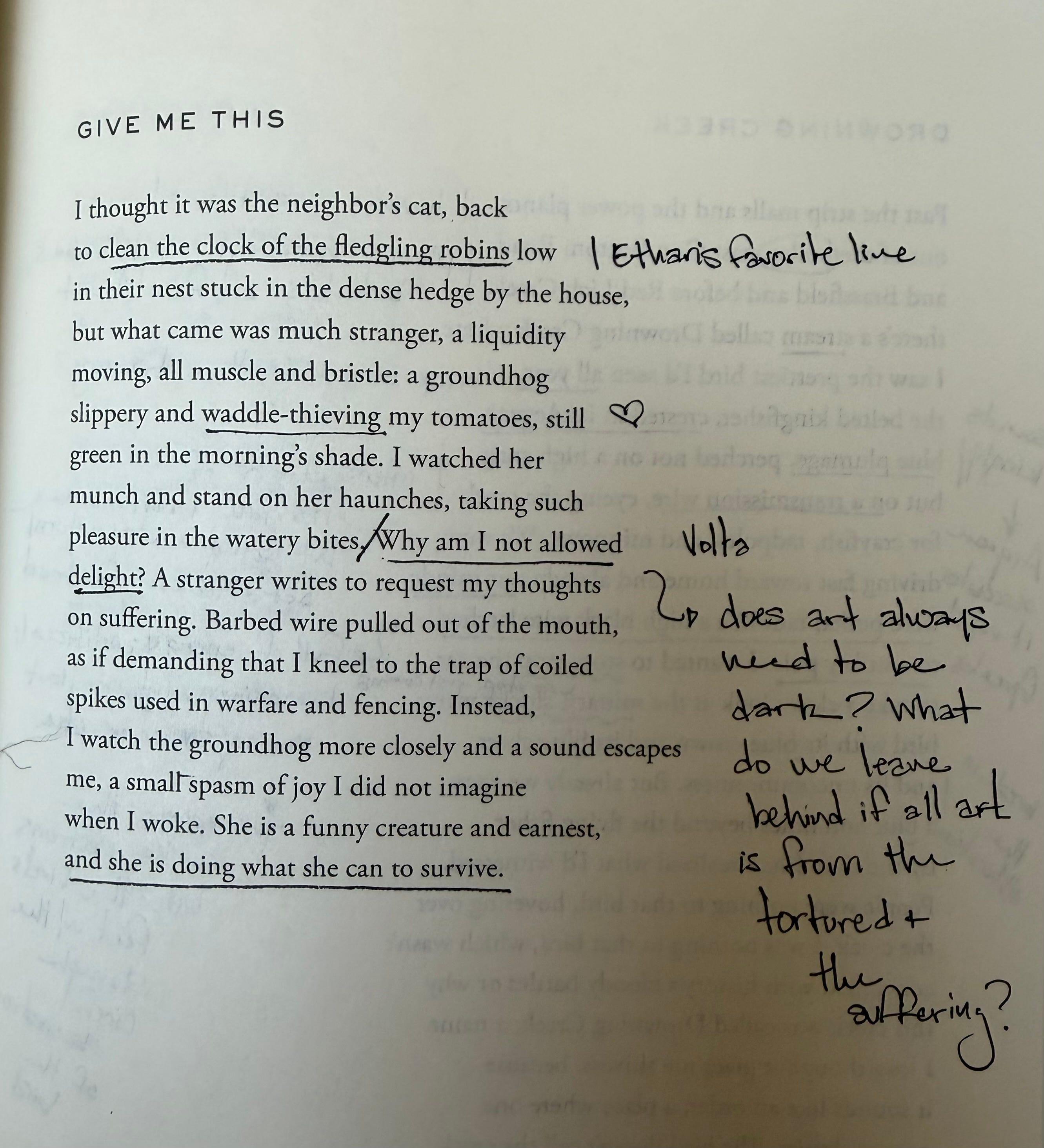
Did you think of a hedgehog when I wrote ‘waddle-thieving?’ Probably not, but doesn’t it just make sense? Will you ever see one again and not think, the perfect description for this chubby, prickly ball is ‘waddle-thieving?’
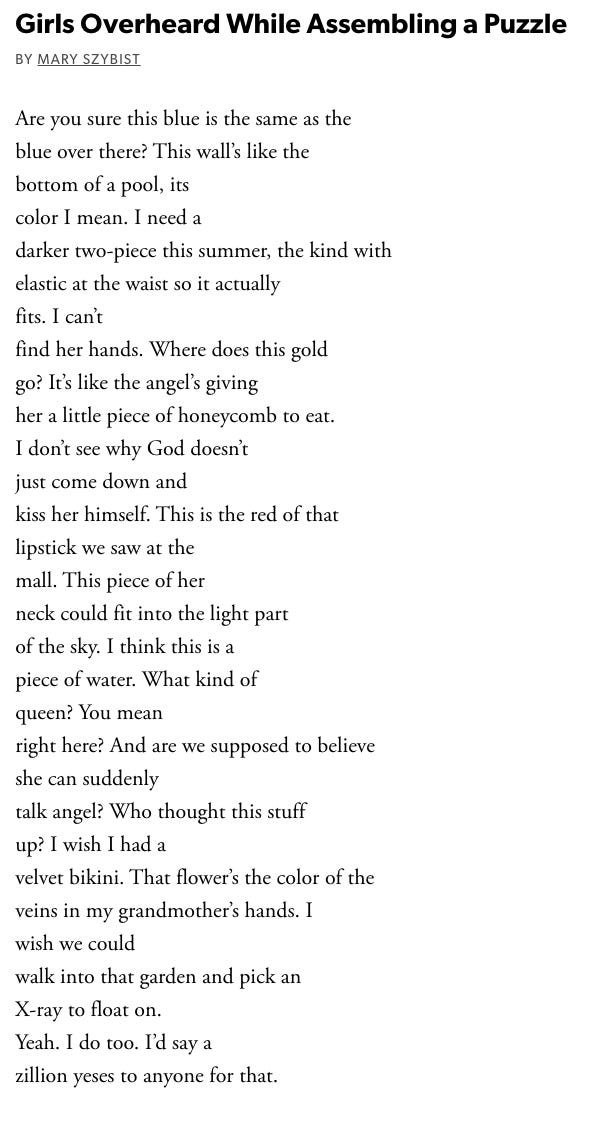
Or maybe you prefer “Girls Overheard While Assembling a Puzzle” by Mary Szybist, which made me eavesdrop on the bus with an entirely new set of ears.
Or perhaps, “The Lanyard” by Billy Collins, which I read at my grandma Mimi’s memorial service because it uses plastic in a way that forever changed how I thought about love.
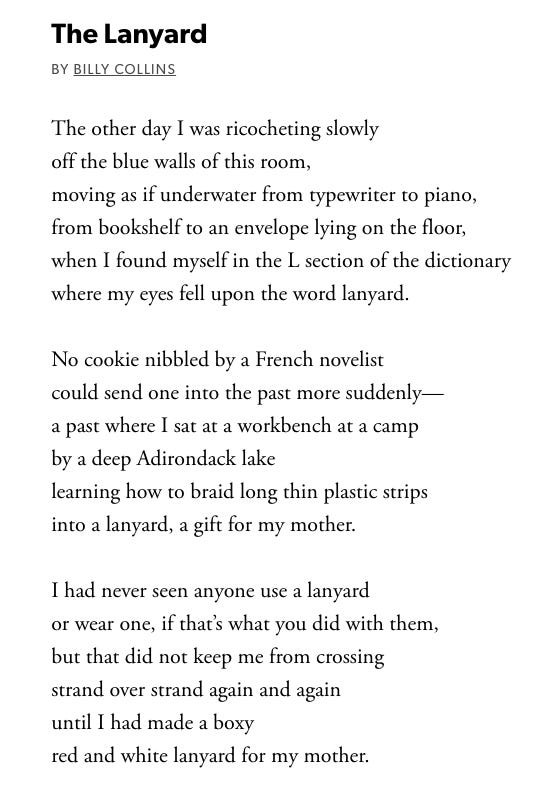
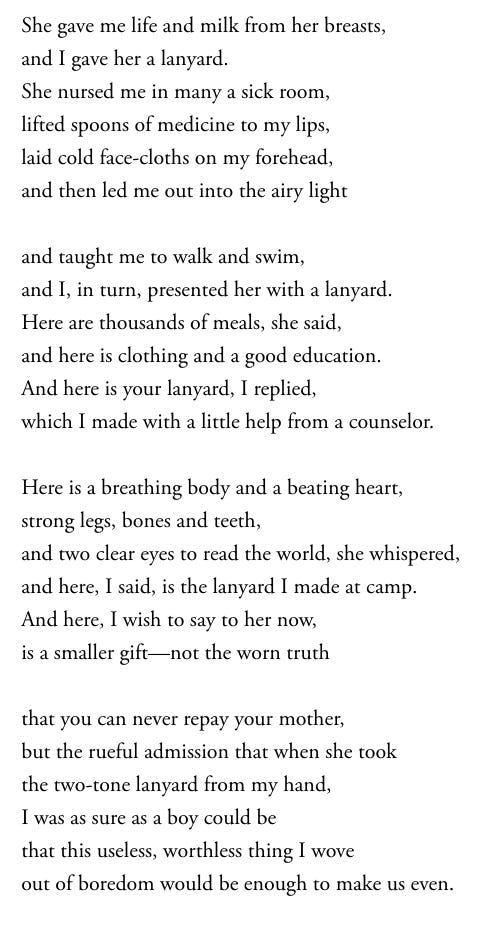
Poetry does not have to intimidate us into meaning-making. It need not only be invoked, as Limón describes, to request one’s participation in your suffering: “Barbed wire pulled out of the mouth.” I want to pay attention to buoyancy and rapture and small absurdities. I want to laugh, not hum. I don’t know about you, but I’m not in the mood for more show-boating or more sorrow. I want sit on my couch with a cup of coffee and listen for size 11 raindrops falling in San Francisco.
Reader Favorites


Support a local bookstore and buy your book from the Filler Content Bookshop!
For writing updates follow Caroline on Instagram: @caroline.santinelli
"Rain falling down like huge feet" -- what a great line! I also like Ada and Billy and Mary.